
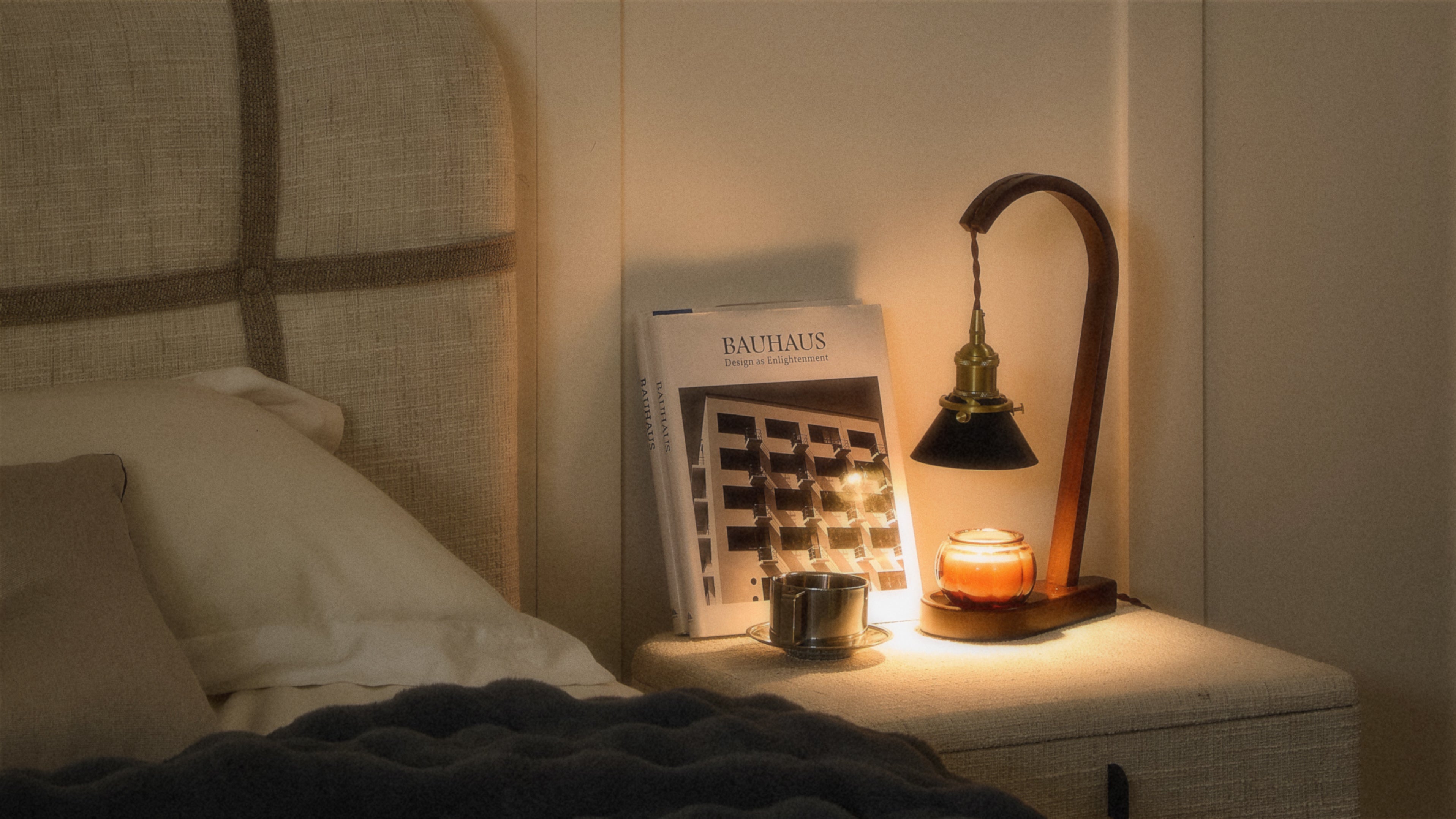
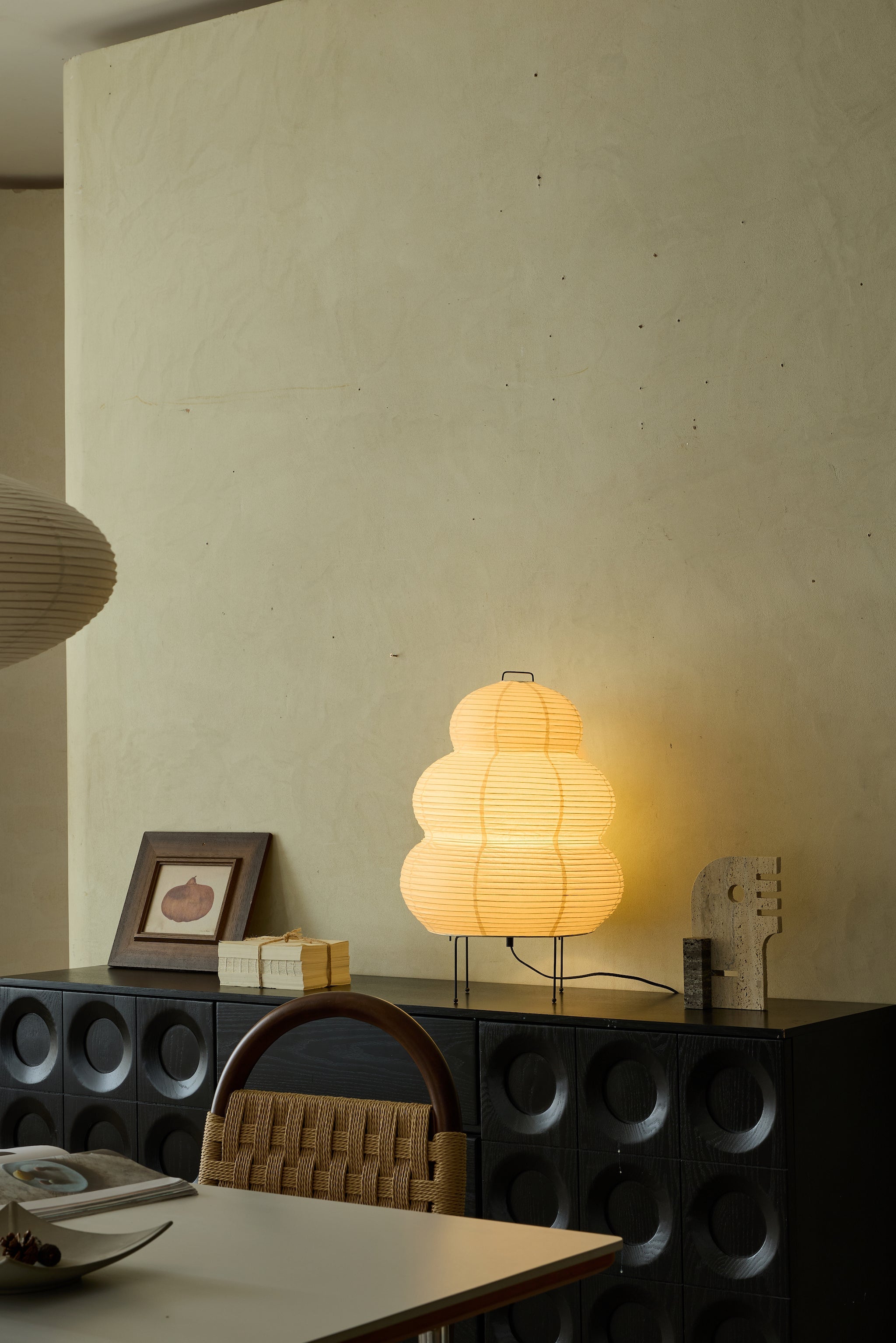

Article: How to choose pendant lighting for any room
How to choose pendant lighting for any room
Pendant lighting is one of the few home purchases that has to work as a sculpture, a tool, and a fixed architectural decision all at once. Get it wrong and you live with it. Get it right and the whole room reads as resolved. This guide covers the four decisions that matter: scale, mounting height, bulb specification, and style family. It closes with how pendants relate to other light in the room and the mistakes worth avoiding.
Start with scale, not style
Most pendant problems are scale problems. A shade that looks generous on a showroom floor often disappears in a real room, and a shade that looks small online can dominate a kitchen island. The two numbers that matter are the diameter of the shade and the volume of the room.
A common rule for general rooms: add the room length and width in feet, then convert to inches. A 12 by 14 foot room takes a fixture roughly 26 inches in diameter for a single statement pendant. Over a kitchen island or dining table, scale to the surface instead: the pendant or grouping should sit between half and two-thirds the table or island length.
| Room or surface | Recommended diameter | Notes |
|---|---|---|
| Entryway, 5 by 5 ft | 10-14 in | Single pendant, centered |
| Bedroom, 11 by 12 ft | 20-24 in | Centered or paired beside the bed |
| Dining table, 60 in long | 30-40 in total width | One large pendant or two-piece cluster |
| Kitchen island, 72 in long | 2 or 3 pendants, 12-16 in each | Spaced evenly with 24-30 in between centers |
| Open living, 16 by 20 ft | 28-36 in | Treat as a focal point, not ambient light |
Mounting height: the part most people get wrong
The standard reference is the bottom of the shade, measured from the finished floor or the surface below it.
- Over a dining table: 30 to 36 inches above the tabletop. Adjust up by 3 inches for every additional foot of ceiling height beyond 8 feet.
- Over a kitchen island: 30 to 32 inches above the counter. Lower if you cook a lot, since steam and sightlines matter.
- In a hallway or entry: at least 7 feet from the floor to the bottom of the fixture. 7.5 feet is more comfortable for taller households.
- In a bedroom beside the bed: 24 to 30 inches above the mattress, or align the bottom of the shade with the bottom edge of the headboard.
Ceiling type also matters. Sloped or vaulted ceilings need adjustable rod or chain pendants. Concrete ceilings need surface canopies that hide a junction box. Drop ceilings often hide ductwork that limits where a fixture can land. Confirm before ordering.
For a deeper look at dining-specific heights and multi-pendant geometry, read how high to hang a dining-room pendant. If your ceilings are 8 to 8.5 feet, the rules above need adjustment, covered in pendant lighting for low ceilings.
Bulb specification: lumens, color temperature, CRI
The bulb does most of the work. A great shade with the wrong bulb feels off. Three numbers to check before you order.
Lumens
Lumens measure brightness. Watts measure power use, which is no longer a reliable proxy for brightness now that LEDs dominate. Plan for roughly 20 lumens per square foot of ambient light in a living room and 30 to 40 in a kitchen, then subtract what you get from other layers.
Color temperature
Measured in Kelvin. Lower numbers are warmer, higher numbers are cooler.
| Kelvin | Feel | Best for |
|---|---|---|
| 2200K | Candlelight, amber | Bedrooms, late-evening dining |
| 2700K | Warm white | Living rooms, dining, bedrooms |
| 3000K | Warm-neutral white | Kitchens, bathrooms, work spaces |
| 3500K and above | Neutral to cool | Garages, utility rooms, studios |
For most home spaces, 2700K is the safer default. A washi paper or fabric pendant filtering 2700K reads almost like firelight.
Color rendering index
CRI measures how accurately a bulb reproduces colors compared to natural daylight, on a 0 to 100 scale. Below 80 makes skin and food look muddy. 90 or above is the floor for living spaces. Many cheap LEDs ship at 80 to 82. Spend a few dollars more for 90+ CRI bulbs and the room shifts noticeably.
Style families: pick a material, then a silhouette
Most pendants fall into one of five material families. Each has a different relationship with light.
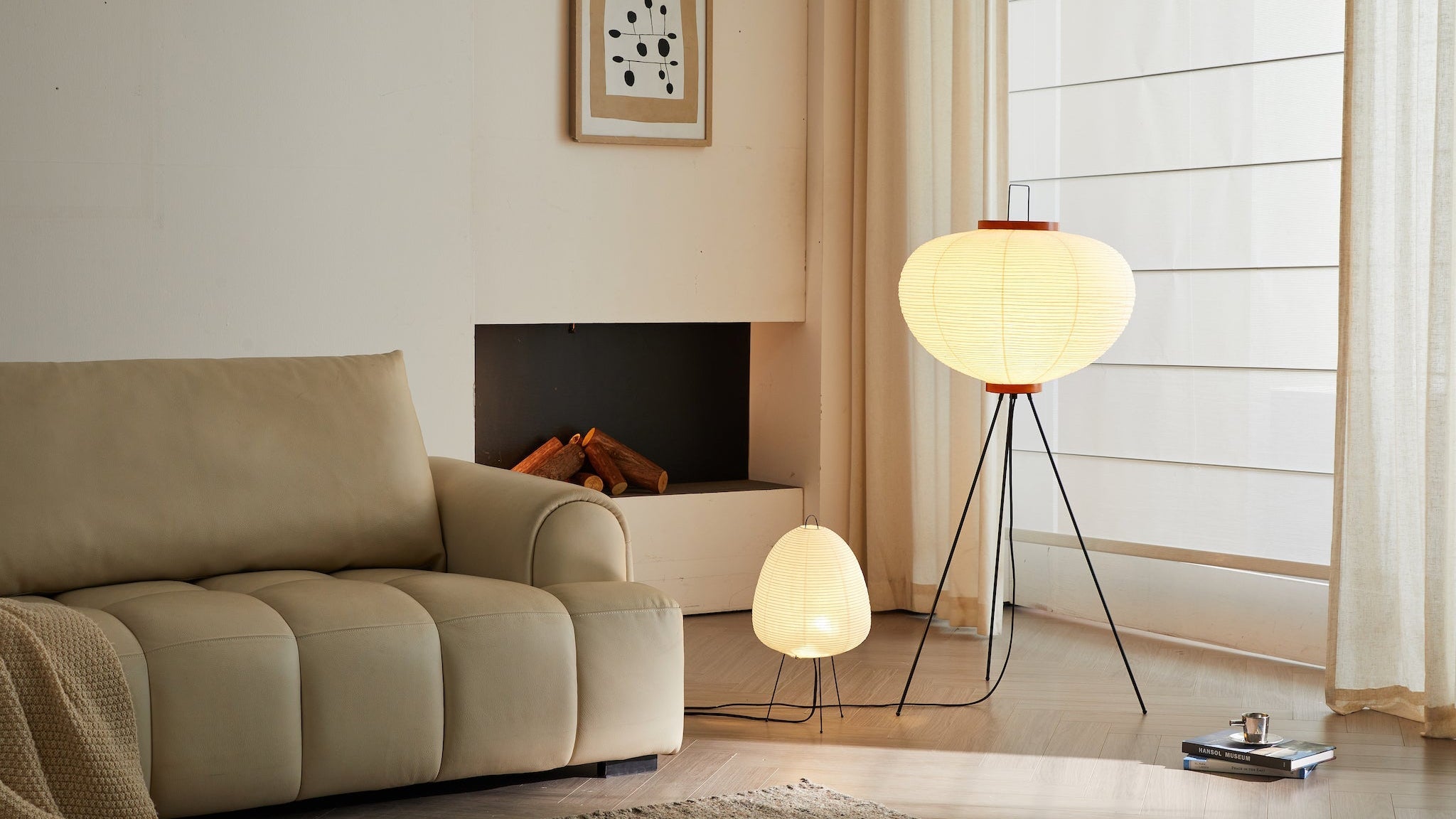
- Washi paper. Warm, almost shadowless diffusion. Light reads like a glow rather than a point. Avoid in kitchens, bathrooms, and humid rooms. Read about the tradition in why washi paper pendants still work.
- Rattan and woven natural fibers. Cast patterned shadows on walls and ceiling. Strong sense of texture. Best with a single warm bulb so the weave reads clearly.
- Glass. Clear, fluted, smoked, or opal. Clear glass shows the bulb, so the bulb itself becomes the design element. Opal and frosted glass diffuse evenly. Smoked glass darkens the room and asks for a brighter bulb.
- Metal. Spun, hammered, or formed. Light goes mostly down, almost none through the shade. Strong task lighting over counters and tables. Limited atmosphere.
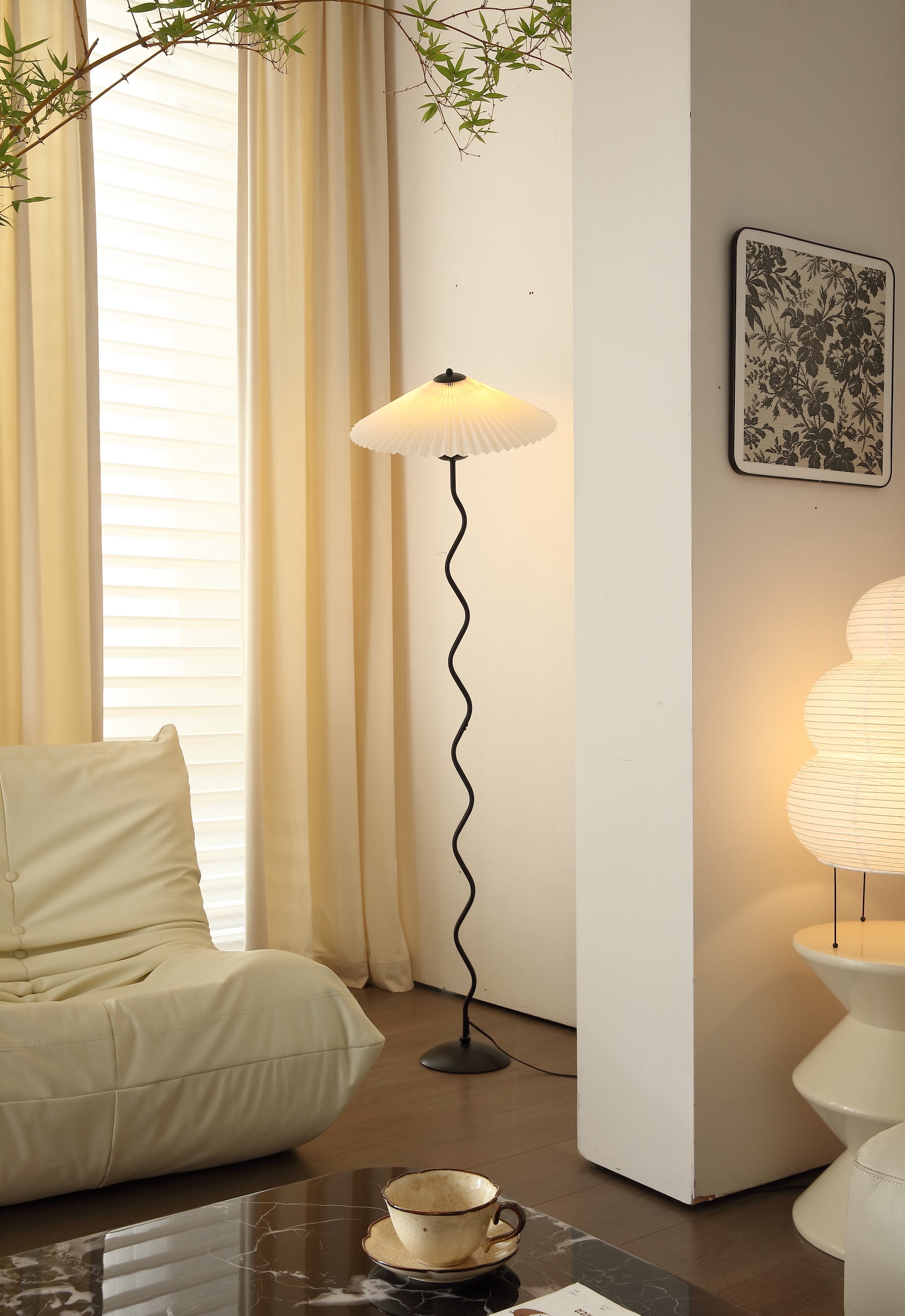
- Fabric. Linen, cotton, silk. Diffuses well, reads warm. Heavier visual weight than paper. Good in bedrooms and reading corners.
Browse the full range in our pendants collection and the broader lighting collection for context.
Finish and color
The shade material decides the diffusion. The shade finish decides how the fixture reads when the light is off. A polished brass pendant in a daytime room becomes a small mirror, picking up window light and reflecting back at the viewer. A matte black pendant disappears into a dark ceiling. A natural rattan or paper shade reads as texture even at noon.
Three rules that hold for most rooms:
- Match the metal of the pendant to one other metal in the room. The faucet, the door hardware, the sofa legs. One match is enough. Three matches starts to feel decorated.
- Avoid black pendants in dark rooms unless you have at least two other accent layers carrying warmth. The fixture will read as a hole.
- For small rooms, lighter shades make the ceiling feel higher. For tall rooms, a darker shade can help anchor the space without lowering the perceived ceiling.
Cord and canopy color matters more than people expect. A black cord on a white ceiling draws a vertical line straight to the fixture. A white cord disappears. Pick on purpose.
How pendants fit into the rest of the room
A pendant should rarely be the only light in a room. The accepted approach is three layers: ambient, task, and accent. Pendants typically cover ambient and sometimes task, depending on placement. The rest comes from table lamps, floor lamps, and wall sconces.
If you only have an overhead pendant in a living room, the room will read flat after dark. A 1500 lumen overhead with two 400 to 600 lumen lamps at sitting height makes the same room feel three-dimensional. The full breakdown is in layering light: how table lamps, pendants, and sconces work together.
When to use multiple pendants
Two or three smaller pendants often work better than one large one over long surfaces. Rules of thumb:
- Over a kitchen island longer than 60 inches, use two or three pendants spaced evenly. Aim for 24 to 30 inches between centers.
- Over a dining table longer than 84 inches, a linear cluster or pair of pendants reads better than one wide shade.
- In open-plan rooms, repeat one pendant style across functional zones (kitchen, dining, sitting) at different scales. The repetition does the work of unifying the space.
Common mistakes
- Hanging too high. A pendant that clears 40 inches above a dining table looks like a smoke detector, not a fixture. Lower it.
- Wrong bulb temperature. A 4000K bulb in a 2700K-styled room kills the atmosphere. Check the box.
- One bulb in a clear glass shade with no dimmer. The point of light becomes a glare source from across the room. Dimmer or frosted bulb required.
- Pendant too small for the room. Especially in entries and dining rooms. If in doubt, size up.
- Ignoring sightlines. A pendant that hangs into the view of a TV or a kitchen prep zone gets unscrewed within a month.
Questions, briefly
What size pendant do I need over a 60-inch dining table?
Aim for 30 to 40 inches of total fixture width. That can be one pendant or a linear group. The bottom of the shade sits 30 to 36 inches above the tabletop.
What is the best color temperature for pendant lighting at home?
2700K for living rooms, dining rooms, and bedrooms. 3000K for kitchens and bathrooms where you want a cleaner light without crossing into clinical territory.How many lumens does a living room pendant need?
For a 12 by 14 foot room, plan for around 3000 to 3500 lumens of total ambient light. A pendant might supply 1500 to 2000 of that, with lamps covering the rest.
Can I use a pendant in a bathroom?
Yes, if it carries a damp-rated or wet-rated label and sits at least 3 feet horizontally from the shower or tub edge. Paper and unsealed fabric pendants are not suitable.
Should pendant lighting be on a dimmer?
Almost always. A dimmer turns the same fixture into morning task light and evening atmosphere. Pair the dimmer with bulbs labeled dimmable or the bulbs will buzz.
Ready to choose? Start with the pendant collection or browse all Hyssop products.


