

Article: Washi paper pendants: why the Japanese tradition still works
Washi paper pendants: why the Japanese tradition still works
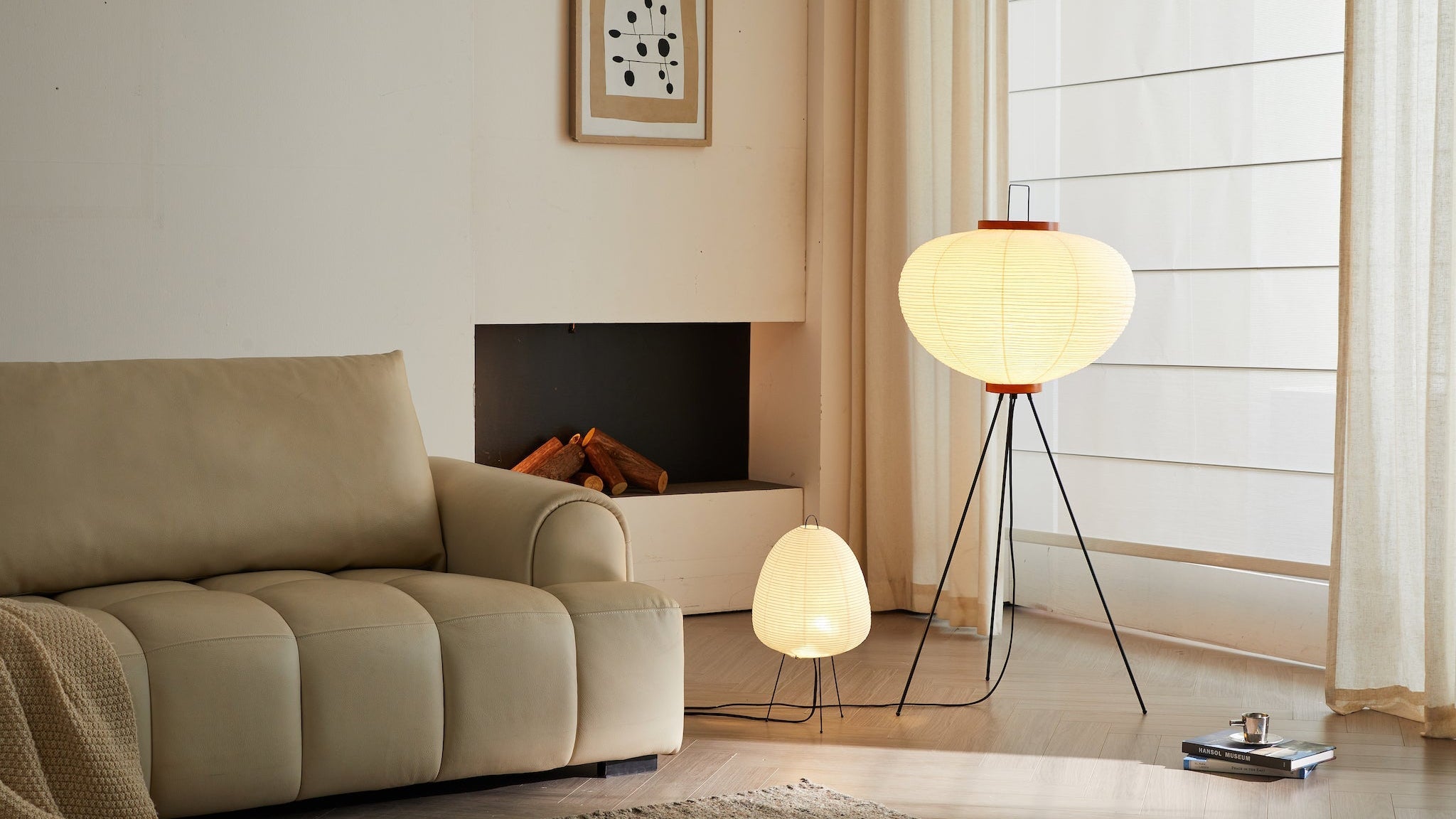
A washi paper pendant is one of the few lighting choices that has not been improved in 75 years. Isamu Noguchi sketched the first Akari lamps in Gifu in 1951, working with the Ozeki family who had been making chochin lanterns since 1891. The fundamentals (bamboo ribbing, mulberry-bark paper, internal incandescent bulb) have barely changed because the result has not been beaten. Here is why washi works, how it ages, and the few rooms where it is wrong.
A very short history
Washi means handmade Japanese paper, traditionally produced from the inner bark of the kozo (paper mulberry), gampi, or mitsumata plant. The fibers are longer than wood pulp, which is why washi can be thinner than wood-pulp paper without falling apart. Lanterns made from washi date back at least to the Edo period, used in temples, festivals, and homes.
In 1951, the mayor of Gifu invited Noguchi to revive the local lantern trade, which was struggling against electric light. Noguchi designed a series he called Akari, the Japanese word for both light and lightness. The first models hung an electric bulb inside a traditional chochin frame and replaced the candle. Over the next thirty years, he designed roughly two hundred shapes, all still made by hand at the Ozeki workshop. The Akari are in the permanent collections of MoMA, the V&A, and most major design museums.
The point is not the museum status. The point is that the technique is mature. When you buy a washi pendant today, you are buying a refined version of something that already worked.
Why the diffusion is unmatched
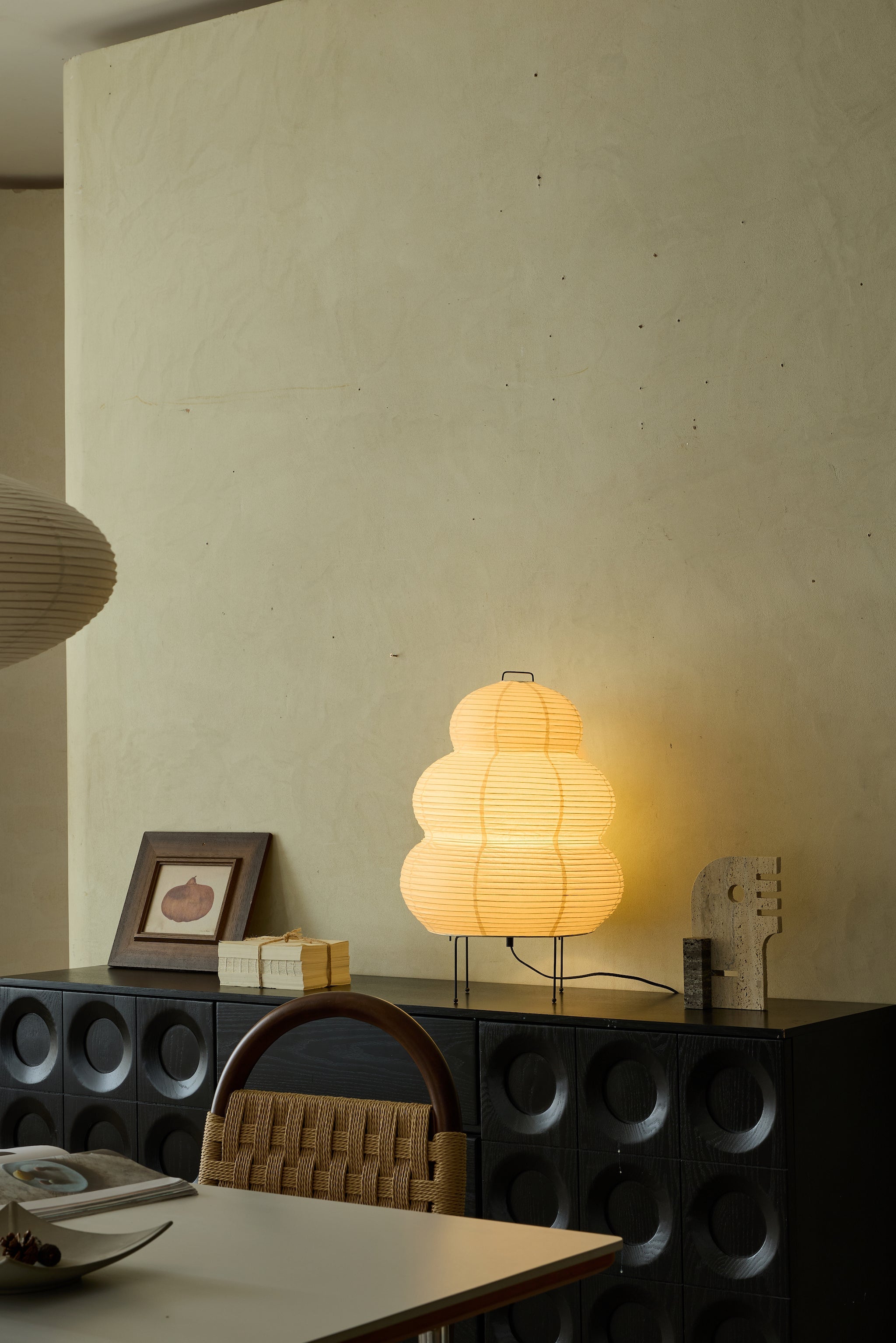
Most lighting materials either block light, transmit it, or scatter it in a small number of ways. Washi does something different. The long mulberry fibers form a slightly uneven mesh that scatters light in many directions at once, with no single dominant angle. The result reads as a glow rather than a point source. There is no hot spot. There is no glare line on the wall. The shade itself becomes the source.
Compared to common alternatives:
| Material | Diffusion quality | Hot spot risk | Visual weight |
|---|---|---|---|
| Washi paper | Even, warm, no glare | None at standard wattage | Light |
| Linen fabric | Even, slightly cooler | Low | Medium-heavy |
| Opal glass | Even, slightly cooler | Low | Medium |
| Clear glass | Sharp, point source visible | High | Light visually, heavy in glare |
| Rice paper (lower quality) | Even but flatter | Low | Light, less depth |
The closest electronic equivalent is a high-CRI LED panel behind heavy diffusion film. It is not the same. Light through washi has the slight texture of the fibers themselves, which the eye reads as natural even when it cannot articulate why.
How washi ages
Properly made washi (long-fiber kozo, no bleach, sized lightly) ages well. The paper warms slightly toward ivory over five to ten years. Bamboo ribbing settles into its glue. Tiny tears can be patched with a square of matching washi and rice glue, which Ozeki and other workshops sell as repair kits.
What ages badly: lower-grade rice paper laminated to fiberglass mesh, often sold as washi-style at low prices. The mesh yellows, the glue fails, and the shade reads as plastic within two seasons of summer humidity. If the listing does not specify mulberry kozo and a bamboo or wire frame, treat the price as the quality signal.
Care
- Dust with a dry brush. A soft natural-bristle paintbrush, not a duster. Work in one direction.
- Never use water. Washi is not waterproof. A damp cloth leaves a stain that will not come out.
- Keep away from steam and smoke. Kitchens, bathrooms, and dining rooms with frequent grilling are not suitable.
- Use bulbs under 60 watts incandescent equivalent, or roughly 800 lumens LED. Higher wattages can yellow the paper from heat and may exceed the fixture rating.
- Replace, do not repaint. If a shade is too damaged to patch, replace the shade rather than trying to coat or seal the paper.
When washi is the wrong choice
- Kitchens with frequent steam or grease. The fibers absorb both. The shade darkens unevenly and cannot be cleaned.
- Bathrooms. Humidity warps the paper and grows mildew on the bamboo frame.
- Outdoor patios and entries. Even covered, the temperature swings damage the paper-and-bamboo joints.
- Rooms with very high ceilings and bright daylight. Washi shines in low to medium light. Under a skylight at noon it can read flat and washed out.
- Households with large dogs or active children at fixture height. The paper tears.
For those rooms, opal glass or fabric pendants from the pendants collection work better. The general selection logic is in how to choose pendant lighting for any room, and pairing washi with sconces and lamps is in layering light.
Where washi is the right choice
- Living rooms and bedrooms with 8 to 10 foot ceilings.
- Hallways and entries away from cooking zones.
- Reading corners, paired with a low-wattage warm bulb on a dimmer.
- Dining rooms (not over induction or gas with frequent searing).
- Studios and offices where the shadow quality matters more than raw lumens.
What to look for when buying
- Material spec: long-fiber kozo (mulberry) paper, ideally hand-laid.
- Frame: bamboo or steel wire, not plastic.
- Construction: visible ribbing through the paper from the inside.
- Origin: Gifu (Japan) is the historic center, but high-quality workshops also exist in Kyoto, Echizen, and parts of Korea and Taiwan.
- Bulb rating: the fixture should specify a max wattage. Respect it.
Browse washi and paper pendants in the Hyssop selection, or the broader lighting collection for pieces that pair with paper shades.
Questions, briefly
What is washi paper made from?
Mostly the inner bark of the kozo (paper mulberry) plant. Some grades use gampi or mitsumata. The long fibers are what give washi its strength and characteristic texture.
Are Akari lamps and washi pendants the same thing?
Akari is the specific series Isamu Noguchi designed starting in 1951, made by Ozeki and Co. in Gifu. Most washi pendants on the market today follow the Akari tradition without being part of the official series.
Can washi paper pendants be used in a kitchen?
Not over a cooktop or in a high-steam zone. They can work over a kitchen table or a breakfast nook a few feet from the stove if ventilation is good.How long does a washi shade last?
Properly made and cared for, ten to twenty years. The paper warms with age but does not necessarily fail. Patches and replacements extend the life further.
What bulb works best in a washi pendant?
A 2700K LED at 600 to 800 lumens, dimmable, with a CRI of 90 or above. Avoid bulbs hotter than 60 watt incandescent equivalent.
For more on bulbs, layering, and where to put which fixture, start with the pendant buying guide.


